
Coconut Shell Processing Machines are engineered to convert hard coconut shells into valuable by-products such as shell charcoal, granulated shell, shell powder, and activated carbon. The complete line integrates crushing, carbonization, activation, and screening systems, ensuring maximum yield with consistent quality. Built for industrial performance, these machines are widely used in carbon plants, energy industries, and chemical processing sectors seeking sustainable raw materials from coconut waste.
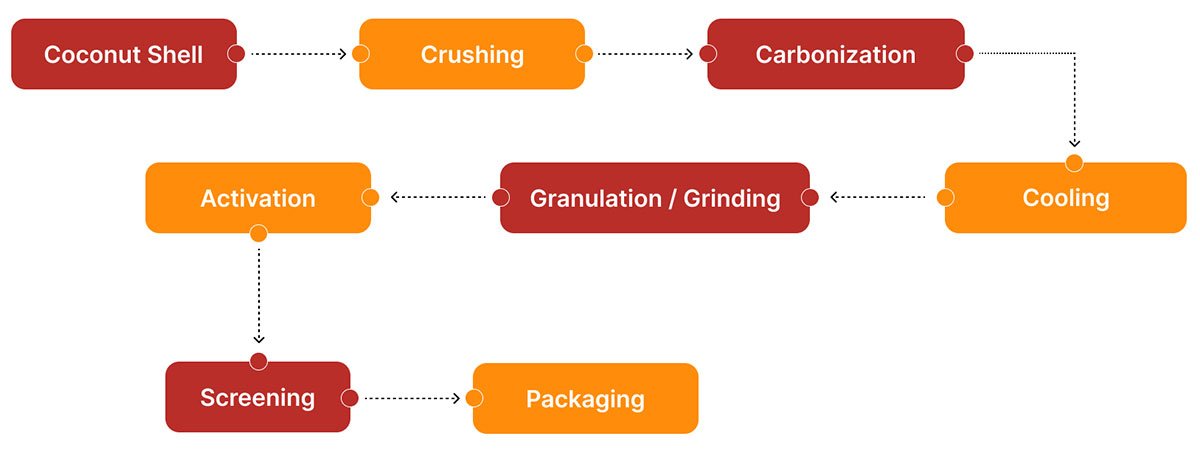
1. Shell Crushing: Dried coconut shells are fed into the crusher, which breaks them into small, uniform chips suitable for carbonization.
2. Carbonization: The crushed shells are heated in a controlled, oxygen-limited environment to produce high-quality shell charcoal.
3. Cooling & Collection: Hot charcoal is cooled and collected safely without contamination.
4. Activation (Optional): The charcoal is treated in an activation furnace or rotary kiln to enhance its surface area and adsorption properties, forming activated carbon.
5. Granulation / Sieving: Activated carbon is crushed and screened to the desired mesh size.
6. Packaging: The final product is packed in moisture-proof bags for storage and export.
From 1000 kg of dried coconut shells (approx.):
The system can be integrated with biomass gasifier technology, allowing shell-based gas to be used as a renewable fuel for the carbonization furnace—reducing fossil fuel use and operating costs while maintaining high thermal efficiency.